

The Evolution of Berlin Street Art: A Journey Through History
- News
-
Nov 27
-
8 min read
- Share post
Berlin is a city where walls tell stories of revolution, division, and ultimate freedom. To understand the evolution of Berlin street art, one must look beyond the spray paint. You must look at the heartbeat of a city that was once split in two. Today, Berlin is the global capital of urban creativity. However, this status was not achieved overnight. It was forged through decades of clandestine activity and artistic defiance. Consequently, if you want to truly experience the city, you must understand how a simple tag evolved into a world-class mural. This guide explores the deep roots of this movement and why it remains the soul of Berlin in 2025.
The evolution of Berlin street art is inextricably linked to the Berlin Wall. During the Cold War, the West side of the Wall became a canvas for political protest. In contrast, the East side remained a sterile “death strip.” This contrast created a unique pressure cooker for creativity. Furthermore, after the fall of the Wall in 1989, the city became a playground for artists from all over the world. They occupied the empty spaces of the East, bringing new styles and techniques. Therefore, understanding this history is essential for anyone attending a graffiti workshop in Berlin today.
The Early Days: Political Defiance and the Berlin Wall
In the 1970s and 80s, the evolution of Berlin street art began as a cry for visibility. West Berlin was an island of democracy surrounded by the GDR. Artists used the Wall to express their frustration with the Cold War. These early works were not about aesthetics; they were about survival and message. Specifically, names like Thierry Noir paved the way by being the first to paint large-scale characters on the concrete. Consequently, the Wall transformed from a symbol of oppression into a medium for dialogue.
Moreover, the American influence cannot be ignored. During this period, US soldiers stationed in Berlin brought the hip-hop culture of New York with them. This introduced the concept of “tagging” and “writing” to the local youth. Because Berlin was a city of ruins and abandoned buildings, the subculture found fertile ground. This blend of European political art and American style is what defined the unique evolution of Berlin street art in its infancy.
Post-Reunification: The Golden Age of Urban Art
The 1990s marked the most significant era for the city’s creative landscape, defining the raw aesthetic and cultural depth that still characterizes Berlin’s urban art today. When the Wall fell, the “No Man’s Land” between East and West suddenly became accessible. Districts like Mitte, Friedrichshain, and Kreuzberg were filled with abandoned factories and crumbling tenements. Artists saw these spaces as a giant gallery. There were no rules, and the police had other priorities. Therefore, the city saw an explosion of color that had never been seen before in Europe.
During this “Wild East” period, international artists flocked to the city. They brought techniques like stenciling, wheatpasting, and installations. This diversity accelerated the evolution of Berlin street art. It shifted from simple lettering to complex, multi-layered visual storytelling. This is the era that gave birth to the iconic murals we still see at the East Side Gallery today. It was a time of total artistic freedom that solidified Berlin’s reputation as a sanctuary for creatives.
From Vandalism to Cultural Heritage
In the 2000s, the public perception of urban art began to change. What was once seen as mere vandalism started to be recognized as a legitimate art form. This shift is a key milestone in the evolution of Berlin street art. Galleries started representing street artists, and the city began to use street art in its tourism marketing. However, this commercialization brought a new challenge: how to keep the art authentic? Many artists moved deeper into the shadows, while others embraced the opportunity to paint legal, massive murals (brand walls).
Consequently, Berlin now exists in a dual reality. On one hand, you have the “Ad-Busting” and clandestine tags that keep the rebellious spirit alive. On the other hand, you have the evolution of Berlin street art into a professional industry. Major festivals and “Urban Nation” museums now celebrate the movement. For the visitor, this means Berlin offers a spectrum of art that is unparalleled in any other city. It is a living museum that changes every single night.
Technique and Style: The Tools of Transformation
To fully appreciate the city’s unique creative history, you must first understand the technical tools that made it possible. Early writers used industrial car paint and homemade markers. These tools were unreliable and limited the artist’s range. However, as the movement grew, so did the technology. Specialized spray cans with different pressures and hundreds of color shades became available. This allowed for the photorealistic murals that now decorate the city’s skyscrapers.
Furthermore, the variety of caps (nozzles) changed the game. An artist could now create a line as thin as a pencil or a spray as wide as a bucket. This technical evolution of Berlin street art made it possible for anyone, including beginners in our workshops, to achieve professional results. Today, we use low-odor, high-pigment paints that are safer for the artist and the environment. This progress reflects the maturity of the art form in 2025.
Mauerpark: The Living Canvas of 2025
If you want to see the evolution of Berlin street art in real-time today, you go to Mauerpark. This park contains the longest remaining legal stretch of the Berlin Wall. It is a place where history meets the present moment. Every day, artists from around the world come here to paint over yesterday’s work. This constant cycle of creation and destruction is the essence of street art. It is ephemeral, temporary, and beautiful.
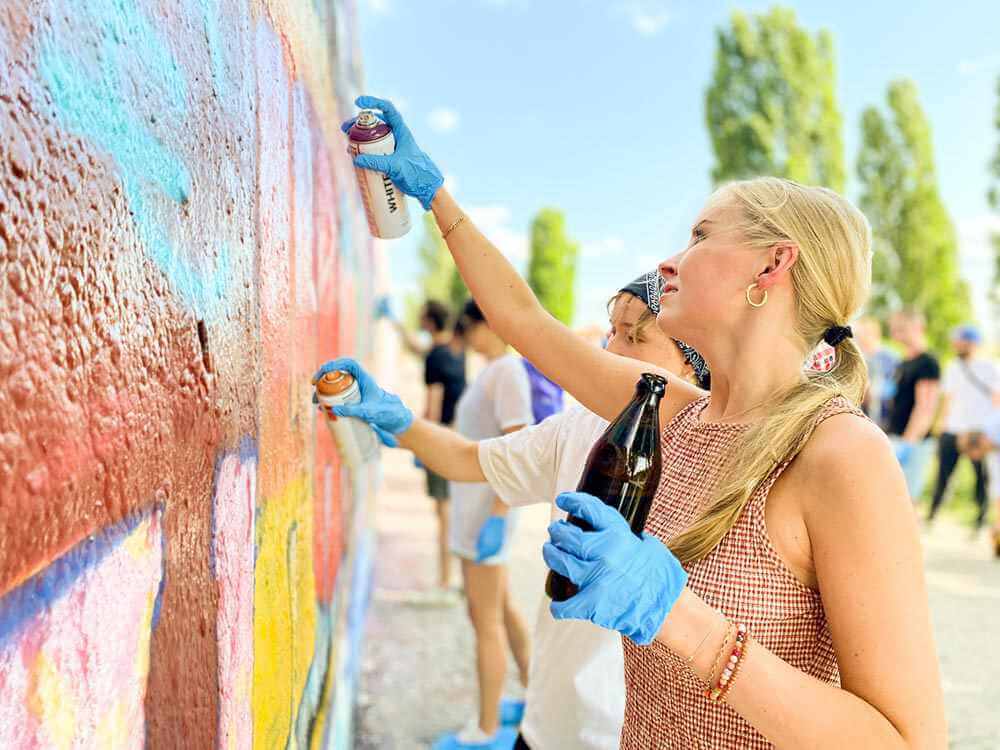
Participating in this creative cycle is the most immersive way to connect with the city’s legendary artistic heritage and its ongoing cultural transformation. When you hold a spray can at the Mauerpark, you are not just painting a wall. You are contributing to a 50-year-old conversation. You are standing where protesters stood, where rebels painted, and where freedom was celebrated. This deep connection to the city’s DNA is why our graffiti workshop focuses on this specific location. We believe that history should be touched, not just read about.
The Rise of Interactive Street Art Experiences
In recent years, the evolution of Berlin street art has moved toward participation. People no longer want to just take a photo of a mural; they want to know how it’s made. They want to feel the pressure of the nozzle and see the paint dry. This move from passive viewing to active creation is the latest chapter in the city’s story. It is why creative workshops have become such a vital part of the Berlin experience.
Moreover, companies have realized that this art form is the perfect metaphor for modern business. It requires agility, collaboration, and a willingness to take risks. Therefore, the evolution of Berlin street art has entered the boardroom. It is now a tool for team building and corporate identity. We are proud to facilitate this bridge between the “street” and the “office,” showing that everyone has a creative voice waiting to be heard.
Why Understanding History Improves Your Art
Many beginners ask if they need to know the history to paint. Our answer is always yes. When you grasp the cultural forces that shaped the city’s walls, your strokes become more confident, transforming a simple line into a connection with Berlin’s creative legacy. You understand that graffiti is not about “making it pretty”; it’s about making it yours. You learn the respect for the “code of the street”—the unwritten rules that keep the community alive. This knowledge transforms your experience from a simple activity into a meaningful journey.
Consequently, our instructors spend time-sharing these stories. We talk about the legends, the “wars” between crews, and the political messages hidden in plain sight. This context is what makes our experience the most authentic in the city. We don’t just teach you how to paint; we teach you how to see the city through the eyes of an artist. This is the ultimate goal of studying the evolution of Berlin street art.
Conclusion: Become Part of the Evolution
The evolution of Berlin street art is an ongoing story, and the next chapter could include you. Berlin remains a city in flux, always reinventing itself through its walls. By learning the history and the techniques, you help keep this vibrant culture alive. Whether you are a solo traveler, a family, or a corporate team, there is a place for you on the wall.
Don’t just walk past the history of Berlin—paint it. Experience the adrenaline, the color, and the community that makes this city unique. Join us at the Mauerpark and see why the evolution of Berlin street art is the most exciting story in modern art. The wall is waiting, and the cans are ready. It’s time to leave your mark.
Contact us today to join the evolution of Berlin street art and book your workshop!