


From Subway Cars to the Berlin Wall: The Comprehensive History of Graffiti Art and its Legacy
- News
-
Jul 07
- Share post
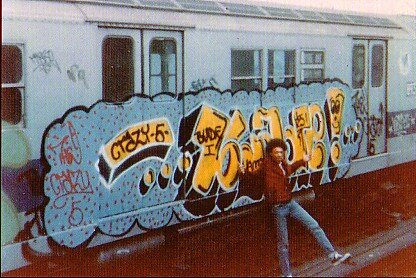
Are you planning a Graffiti Tour in Berlin? To truly appreciate the vibrant street scape of Europe’s cultural capital, one must first understand the revolutionary journey of graffiti art. Far from being a random act of vandalism, modern graffiti is a complex, competitive, and culturally rich subculture born out of urban necessity and creative ambition.
Join us as we explore how this global art movement started, tracing its explosive origins in New York City and detailing its profound cultural, political, and artistic evolution—a legacy we proudly share during our unique Graffiti Tours in Berlin.
The Genesis: How Graffiti Began in Philadelphia and Exploded in NYC
The roots of modern tagging, or “writing,” began not in New York, but in Philadelphia in the mid-1960s, with figures like CORNBREAD laying the groundwork. However, the center of gravity decisively shifted to New York City around 1970, where the urban landscape and the massive subway system provided the perfect, mobile canvas for a new form of self-expression.
Taki 183: The Spark that Ignited a Movement
The legend of TAKI 183 (Demetrius, a Greek-American teenager) marks the true birth of the graffiti movement as a competitive, media-driven culture. TAKI 183, using a simple name combining his nickname and his street number (183rd Street), started tagging his name across Manhattan while working as a courier. His aim was simple: fame through omnipresence.
This simple act was amplified in 1971 when The New York Times published a foundational article titled “Taki 183 Spawns Pen Pals.” This gave the anonymous street movement its first public face and, crucially, introduced the idea that graffiti was a competitive pursuit for city-wide recognition. Suddenly, teenagers across the boroughs recognized the subway as a travelling trophy, transporting their names—their identities—throughout the city and beyond.
The Critical Role of the Subway System
The New York City subway was the ultimate gallery. Graffiti writers recognized that painting a “whole car” or a “top-to-bottom” piece was the fastest way to achieve mass exposure. This high-risk, high-reward environment fostered rapid stylistic innovation, driven by a deep desire for “King” status.
The Artistic Evolution: From Tag to Wild Style
The history of graffiti is marked by a relentless, competitive evolution of style. What began as simple, easily readable signatures quickly morphed into complex, almost architectural pieces.
Phase 1: The Tag (Identity)
The Tag remains the core signature of a writer. It is about speed, repetition, and presence. Early pioneers like Julio 204 and STAY HIGH 149 set the standards for elegance and speed. The competitive drive was to have the most visible tags in the most inaccessible locations (“bombing”).
Phase 2: The Piece (The Art Form)
Writers like PHASE 2 started developing the ‘piece’ (masterpiece), using fat bubble letters, 3D effects, and early forms of arrows and connectors. This marked the transition from simple name-writing to an actual artistic pursuit, requiring skill and preparation.
Phase 3: Wild Style and Complexity
Legends such as DONDI, Tracy 168, and Lady Pink pushed the boundaries further, developing Wild Style—an intricate, often illegible form of lettering characterized by interwoven letters, sharp angles, and dynamic arrows. Wild Style was a status symbol, designed to be read only by other elite writers, establishing a cultural hierarchy within the subculture.
Phase 4: Murals and Commercial
Recognition By the late 1970s and early 1980s, the art world began to take notice. Artists like Zephyr and LEE started transitioning from subway cars to canvases and galleries. This commercial shift, aided by photographers like Martha Cooper (who documented the scene) and films like Wild Style (1983), solidified graffiti’s status as a legitimate modern art form, even as its illegal bombing roots continued.
Graffiti’s Philosophical and Political Dimension
While initially focused on fame, graffiti quickly adopted deeper social and political roles, especially concerning social inequality, urban decay, and freedom of expression.
The Difference Between Graffiti and Street-Art
It is vital to distinguish between the two:
- Graffiti: Primarily focused on identity, lettering, and name recognition. The target audience is typically other graffiti writers.
- Street Art (Post-Graffiti): Broader category focusing on imagery, message, and public dialogue. Artists like Banksy, using stencils and characters, aim for universal, often political, understanding.
This distinction is crucial for understanding the modern context in Berlin, where both forms coexist and clash.
From New York Subways to the Berlin Wall: Graffiti’s Unique German Legacy
Graffiti found fertile ground in Berlin due to its deep political divisions and its post-war environment of constant transformation. Unlike New York, where graffiti was initially an act of rebellion against invisibility, in Berlin, it was an act of defiance against oppression and political division.
The Wall as the Ultimate Canvas of Freedom
The Western side of the Berlin Wall became the largest open-air canvas in the world. Writers—both tourists and locals, used the Wall to convey powerful messages of peace, humor, and protest against the separation. Famous artists used the Wall not just as a piece of history, but as a living, evolving gallery. The most powerful pieces, such as the famous murals on the East Side Gallery (the remnants of the Wall), directly address historical injustice and hope.
When the Wall fell, the art was immediately recognized as an integral part of its legacy, underscoring graffiti’s unique ability to merge historical documentation with artistic expression.
The Contemporary Berlin Scene: Subculture Meets High Art
Today, Berlin hosts one of the most diverse and competitive street art scenes globally. From the dedicated bombers carrying on the NYC tradition in Mitte and Kreuzberg to the renowned murals funded by local governments, the city’s walls are a living textbook. This coexistence of underground culture and government-sanctioned art makes Berlin the ultimate destination for cultural exploration.
Experience the History Firsthand: Our Unique Graffiti Tour in Berlin
Understanding this rich history is the key to unlocking the true soul of Berlin. Our tours are not generic walking trips; they are comprehensive cultural expeditions led by artists who have lived and breathed this subculture for over 15 years.
What Makes Our Tour Unique?
- Expert Insight (E-A-T): Led by active “writers,” we offer firsthand, unwritten stories about the techniques, rivalries, and unwritten rules of the scene—knowledge you won’t find in guidebooks.
- Contextual Understanding: We show you the direct links between 1970s New York styles and the pieces you see today in districts like Kreuzberg, Friedrichshain, and Wedding.
- Access to Key Locations: We take you beyond the tourist hotspots, revealing hidden tags, political murals, and the legal painting zones where the culture thrives today.
If you want to move beyond observation and actively participate in this amazing culture, we offer the chance to paint your first piece on a legal, sanctioned urban art canvas near the Wall’s legacy, connecting you directly to this historical art form.
Ready to Explore the Unwritten History of the Streets?
Don’t just see the sights; understand the stories behind them. Our Graffiti Tour in Berlin is the ultimate way to connect with the city’s rebellious, creative spirit, guided by true insiders.
Book Your Expert Graffiti History Tour Today
Contact us: If you’re inspired to go hands-on, feel free to contact us for a unique Graffiti workshop experience where you can create your own masterpiece.