


History of the Mauerpark: From Berlin Wall Death Strip to Graffiti Icon (2026 Guide)
- News
-
Oct 02
- Share post
Introduction: Why Mauerpark Matters More Than Ever
Mauerpark is one of Berlin’s most symbolic places, an open-air museum of freedom, art, and transformation.
Few locations capture Berlin’s dramatic history as vividly as this former border zone, now known worldwide for its graffiti wall, flea market, and open-air karaoke.
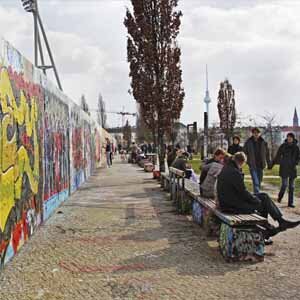
Located between Prenzlauer Berg and Wedding, Mauerpark embodies Berlin’s story: division, reunification, and cultural rebirth. Its walls, paths, and open spaces still carry the marks of the past while welcoming thousands of locals, families, travelers, and street artists every week.
Early History of Mauerpark (Before the Berlin Wall)
The Nordbahnhof Railway Yards
Before becoming a park, the entire Mauerpark area was part of the Nordbahnhof freight yards.
Built in the 19th century, these railway fields were a major industrial artery carrying coal, wood, and goods across northern Germany.
Prenzlauer Berg and Berlin’s Urban Expansion
As Berlin expanded rapidly, factories and workers’ housing dominated the area. Nothing suggested that this industrial zone would one day become one of the world’s most famous graffiti spots.
A Border Location After WWII
After World War II, Berlin was divided, and the Nordbahnhof area suddenly lay directly between the French sector (West Berlin) and the Soviet sector (East Berlin). This geographical accident sealed its destiny for decades.
1961–1989: Mauerpark Inside the Death Strip
The Berlin Wall Is Built
On August 13, 1961, the East German government built the Berlin Wall.
The future Mauerpark became part of the “Todesstreifen”—the Death Strip—one of the most fortified and dangerous border sections.
Watchtowers, Floodlights, and Patrol Roads
The area included:
- several watchtowers
- barbed wire barriers
- floodlights
- patrol roads
- guard dogs
- anti-vehicle trenches
- multiple concrete walls
It was an area designed to stop any escape attempt at any cost.
Escape Attempts and Personal Stories
Despite the danger, some East Berliners attempted to flee through this section.
Many stories of courage and tragedy took place exactly where families now picnic and children play.
An Abandoned No-Man’s Land
For nearly 30 years, the land was fenced off, empty, silent. Nature slowly reclaimed it, but the area remained inaccessible and emotionally heavy.
1989–1999: The Birth of Mauerpark
The Fall of the Wall
On November 9, 1989, the Berlin Wall fell. Residents of both sides immediately reclaimed the area, painting graffiti, removing concrete, and celebrating freedom.
First Community Projects
Local activists and artists campaigned for the abandoned border zone to become a public park dedicated to peace, art, and memory.
Making It Official: “Mauerpark”
Landscape architect Gustav Lange designed the first official park layout in the mid-1990s.
In 1999, the name “Mauerpark” became official, honoring the historical significance of the area.
Graffiti & Street Art at Mauerpark
The Origin of Berlin’s Famous Legal Wall
After reunification, artists began painting on the remaining wall segments.
Unlike other walls, Mauerpark’s structure was kept as an open legal space. This made it one of Berlin’s oldest and most iconic graffiti walls.
A Global Street Art Destination
Today, artists from more than 50 countries come to paint at Mauerpark:
- beginners spraying for the first time
- international graffiti crews
- families painting together
- professional muralists
The artwork changes every day, sometimes every hour.
Graffiti Style Evolution
From tags and throw-ups to wildstyle letters and large murals, Mauerpark showcases Berlin’s raw and free artistic identity.
Mauerpark Today: A Cultural Symbol of Freedom
The Sunday Flea Market
Every Sunday, thousands gather for one of Berlin’s best flea markets, vintage clothes, handmade jewelry, food stalls, records, and art.
Bearpit Karaoke
Since 2009, the amphitheater becomes a huge open-air karaoke stage.
Anyone can sing. The crowd is large, cheerful, and welcoming. It’s one of Berlin’s most beloved traditions.
Music, Street Art, Families, Travelers
Walk through the park and you’ll find:
- musicians
- dancers
- painters
- families
- photographers
- street food vendors
Mauerpark is a global meeting point.
A Living Memory of Berlin’s Past
Walking through Mauerpark means stepping simultaneously into Berlin’s division, reunification, and cultural rebirth.
Practical Visitor Guide
Best Times to Visit
Sunday → flea market + karaoke + graffiti action
Early morning → quiet, perfect for families & photography
Weekdays → best for painting on the graffiti wall
How to Find the Graffiti Wall
Located on the upper slope near the Friedrich-Ludwig-Jahn-Sportpark stadium.
Is Graffiti Legal at Mauerpark?
Yes—Mauerpark is one of Berlin’s official legal graffiti walls.
Bring your own spray cans or join a workshop if you want guidance.
Tips for Families & Photographers
- bring snacks
- visit earlier for fewer crowds
- perfect light around sunset
- safe and very kid-friendly
FAQ
When did Mauerpark open?
Mauerpark officially opened in 1999 after the redevelopment of the former Death Strip.
Was Mauerpark part of the Berlin Wall?
Yes. The entire area was inside the border security zone.
Is graffiti legal at Mauerpark?
Yes, the graffiti wall is officially open to the public.
Why is Mauerpark famous?
The graffiti wall, flea market, karaoke, street art culture, and its symbolic history.
What can families do at Mauerpark?
Picnic, play, visit the flea market, enjoy music, and explore graffiti safely.
Conclusion
Mauerpark is more than a park, it is a symbol of freedom and creativity.
From deadly border strip to artistic playground, its transformation reflects Berlin’s identity.
If you want to experience graffiti culture firsthand, you can also book a guided graffiti workshop and paint on the Berlin Wall at Mauerpark.

